Understanding Glaucoma Symptoms and Early Detection Strategies
If you are wondering what the first signs of glaucoma are, the answer may surprise you: most people with the early stages of primary open-angle glaucoma—the most common type—have no symptoms at all. This is why glaucoma is often called the ‘silent thief of sight.’ The vision loss it causes is gradual, painless, and permanent once it occurs. The good news is that the irreversible damage can be prevented or slowed with early detection, and that requires routine eye exams, especially if you are over 40 or have known risk factors. This article explains the symptoms to watch for, the screening tests that can catch the disease early, and when to see an eye specialist urgently in Bangladesh.
Why Is Glaucoma Called the ‘Silent Thief of Sight’?
Glaucoma refers to a group of optic nerve diseases that progressively damage the nerve fibers responsible for carrying visual signals from the eye to the brain. The most common form, primary open-angle glaucoma, typically begins with elevated intraocular pressure (IOP) that slowly compresses the optic nerve. In the early stages, this process is completely painless, and the brain compensates for the slow loss of peripheral (side) vision so well that most patients do not notice any change until a significant amount of vision is already gone. By the time central vision is affected, the damage is often advanced and irreversible.
This silent progression is the main reason why glaucoma is a leading cause of irreversible blindness worldwide—including in Bangladesh. Unlike cataracts, which cause noticeable blurring and can be surgically corrected, glaucoma has no early warning signs. The only way to detect it before vision loss occurs is through a comprehensive eye examination that includes measuring eye pressure and examining the optic nerve.
Common Glaucoma Symptoms: When to Pay Attention
While the early stages of open-angle glaucoma are asymptomatic, there are forms of glaucoma that produce distinct symptoms. Acute angle-closure glaucoma, for example, is a medical emergency that presents suddenly and painfully. The table below summarizes the key differences between the two main types.
| Feature | Primary Open-Angle Glaucoma | Acute Angle-Closure Glaucoma |
|---|---|---|
| Onset | Gradual, over months to years | Sudden, within hours |
| Early symptoms | None (asymptomatic) | Severe eye pain, headache |
| Vision changes | Gradual loss of peripheral (side) vision; tunnel vision in later stages | Sudden blurred vision, colored halos around lights |
| Associated signs | None | Red eye, nausea, vomiting |
| Eye pressure | Mildly to moderately elevated (usually painless) | Very high (often >40 mmHg); painful |
| Urgency | Routine evaluation | Immediate emergency care required |
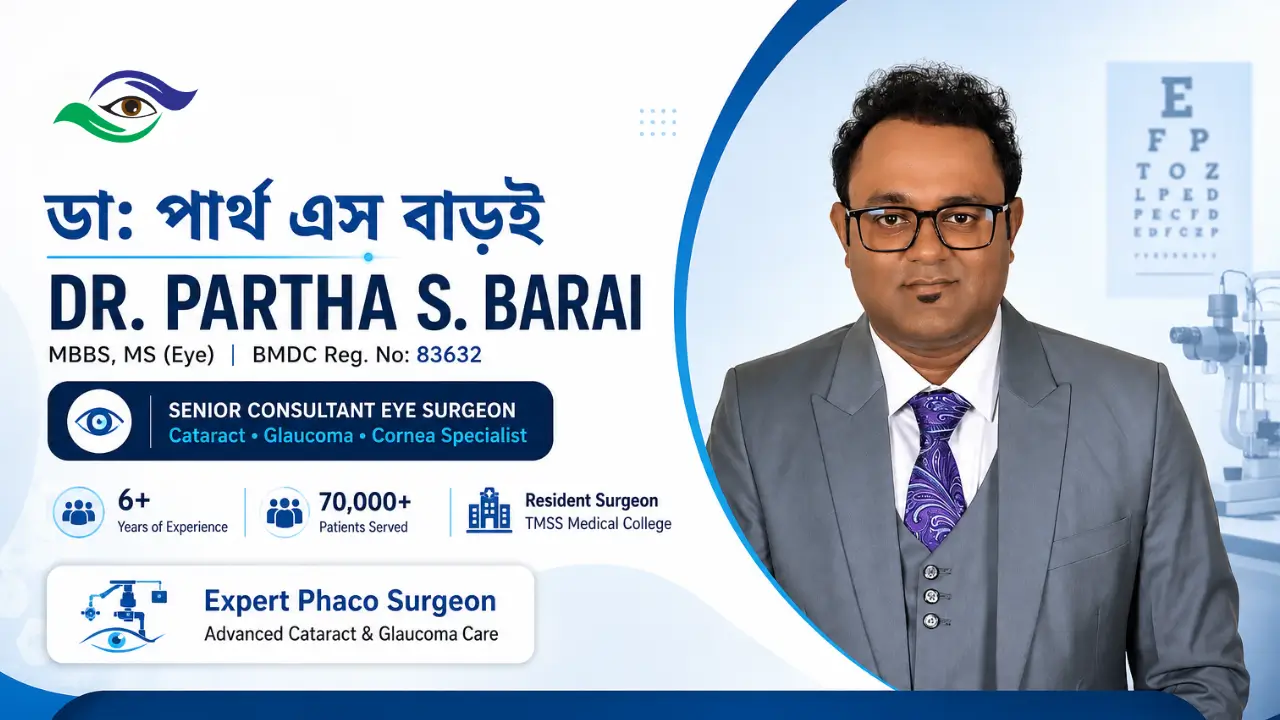
For open-angle glaucoma, the only common symptom in early stages is a subtle loss of peripheral vision that patients may not notice. As the disease progresses, you might feel as though you are seeing through a tunnel. For angle-closure glaucoma, the sudden onset of severe eye pain, blurred vision, halos around lights, and nausea are red flags that require immediate evaluation by an eye specialist. If in-person advice is needed, contact with Dr. Partha S. Barai.
Who Is Most at Risk in Bangladesh?
Several factors increase the risk of developing glaucoma, and many are common among Bangladeshi adults. The most important risk factor is age—everyone over 40 should have a baseline eye exam, even if they have no vision problems. Other significant risk factors include:
- Family history: Having a parent, sibling, or child with glaucoma increases your risk 4–9 times.
- Diabetes and hypertension: Both conditions are linked to higher intraocular pressure and optic nerve damage.
- High myopia (short-sightedness): People with severe nearsightedness have a higher risk of open-angle glaucoma.
- Prolonged steroid use: Using corticosteroid eye drops, oral steroids, or ointments for conditions like asthma or allergies can raise eye pressure.
- Ethnic background: People of African, Hispanic, or Asian descent are at higher risk for certain glaucoma types.
If you fall into any of these categories, it is especially important to schedule a comprehensive eye exam. At Netraloy Eye Care Center in Bogura, Dr. Partha S. Barai offers routine screening for patients with risk factors, using modern diagnostic equipment to detect glaucoma early.
How Is Glaucoma Detected Early? (Key Screening Tests)
Early detection of glaucoma relies on a series of tests that assess eye pressure, optic nerve structure, and visual field function. These tests are painless and usually take about 30–45 minutes. The most important screening tools include: If in-person advice is needed, Dr. Partha S. Barai.
- Tonometry: Measures intraocular pressure (IOP). A puff of air or a gentle probe touches the cornea. Normal IOP is typically 10–21 mmHg, but glaucoma can occur even with ‘normal’ pressure (normal-tension glaucoma).
- Ophthalmoscopy (optic nerve exam): The doctor dilates your pupil with drops and examines the optic nerve head for cupping or thinning—a key sign of damage.
- Perimetry (visual field test): You look at a central target and respond when you see lights in your side vision. This maps areas of vision loss.
- Optical coherence tomography (OCT): A non-invasive imaging scan that creates a detailed cross-section of the optic nerve and retinal nerve fiber layer. OCT can detect thinning before visual field defects appear.
These tests are available at eye hospitals and clinics across Bangladesh, including at Dr. Partha S. Barai’s clinic in Bogura. If you are 40 or older—or have any risk factors—a baseline eye exam with tonometry and optic nerve evaluation is recommended every one to two years.
When Should You See an Eye Specialist Urgently?
While most glaucoma is asymptomatic in early stages, certain symptoms require immediate medical attention. If you experience any of the following, see an eye specialist as soon as possible—do not wait:
- Sudden, severe eye pain
- Blurred vision or sudden vision loss
- Seeing colored halos around lights
- Redness in one eye accompanied by pain
- Nausea or vomiting with eye pain (may indicate acute angle-closure glaucoma)
- A sudden increase in the number of floaters or flashes of light
These symptoms can indicate acute angle-closure glaucoma or other serious conditions like uveitis or retinal detachment, which require prompt diagnosis and treatment to prevent permanent vision loss. In Bangladesh, you can go to an emergency room at a public hospital like BSMMU (Bangabandhu Sheikh Mujib Medical University) or contact a private clinic. For a comprehensive evaluation and management plan, you can contact with Dr. Partha S. Barai at Netraloy Eye Care Center in Bogura. Remember, glaucoma is treatable but not curable; the goal is to preserve the vision you have by controlling eye pressure and protecting the optic nerve.
Frequently Asked Questions
Can glaucoma be cured completely once it is detected?
No, glaucoma cannot be cured, but early detection and treatment can significantly slow or halt vision loss. Treatments such as eye drops, laser therapy, or surgery help lower intraocular pressure to protect the optic nerve. Vision that is already lost cannot be restored, which is why regular eye exams are critical for prevention.
Are there any home remedies or lifestyle changes that can prevent glaucoma?
While no home remedy can prevent or reverse glaucoma, certain lifestyle habits may support overall eye health. These include maintaining a healthy weight, avoiding smoking, staying hydrated, and managing conditions like diabetes and high blood pressure. However, these are not substitutes for professional eye exams or prescribed treatments. Always consult an eye specialist for personalized advice.
If I have a family history of glaucoma, how often should I get my eyes checked?
If you have a parent or sibling with glaucoma, you are at higher risk. Eye specialists generally recommend a comprehensive dilated eye exam every one to two years if you are over 40, or more frequently if advised by your doctor. In Bangladesh, many clinics offer affordable screening, so discuss your family history with an ophthalmologist to set a personalized schedule.
Is glaucoma only a problem for elderly people, or can younger adults also develop it?
While glaucoma is more common after age 60, it can affect younger adults, and even children, especially in certain types like congenital or secondary glaucoma. Risk factors include severe eye injury, prolonged steroid use, high myopia, and certain medical conditions. Anyone with risk factors should not ignore routine eye checks regardless of age.
Can glaucoma symptoms suddenly appear, or do they always develop slowly?
Most types of glaucoma develop slowly and painlessly, with no early symptoms. However, acute angle-closure glaucoma is an emergency where symptoms can appear suddenly, including severe eye pain, headache, nausea, blurred vision, and seeing halos around lights. If you experience these, seek immediate medical attention in Bangladesh to prevent rapid vision loss.